Dual Vocational Training
The Austrian system of dual vocational training is unique and serves as an international best practice example.
The Apprenticeship
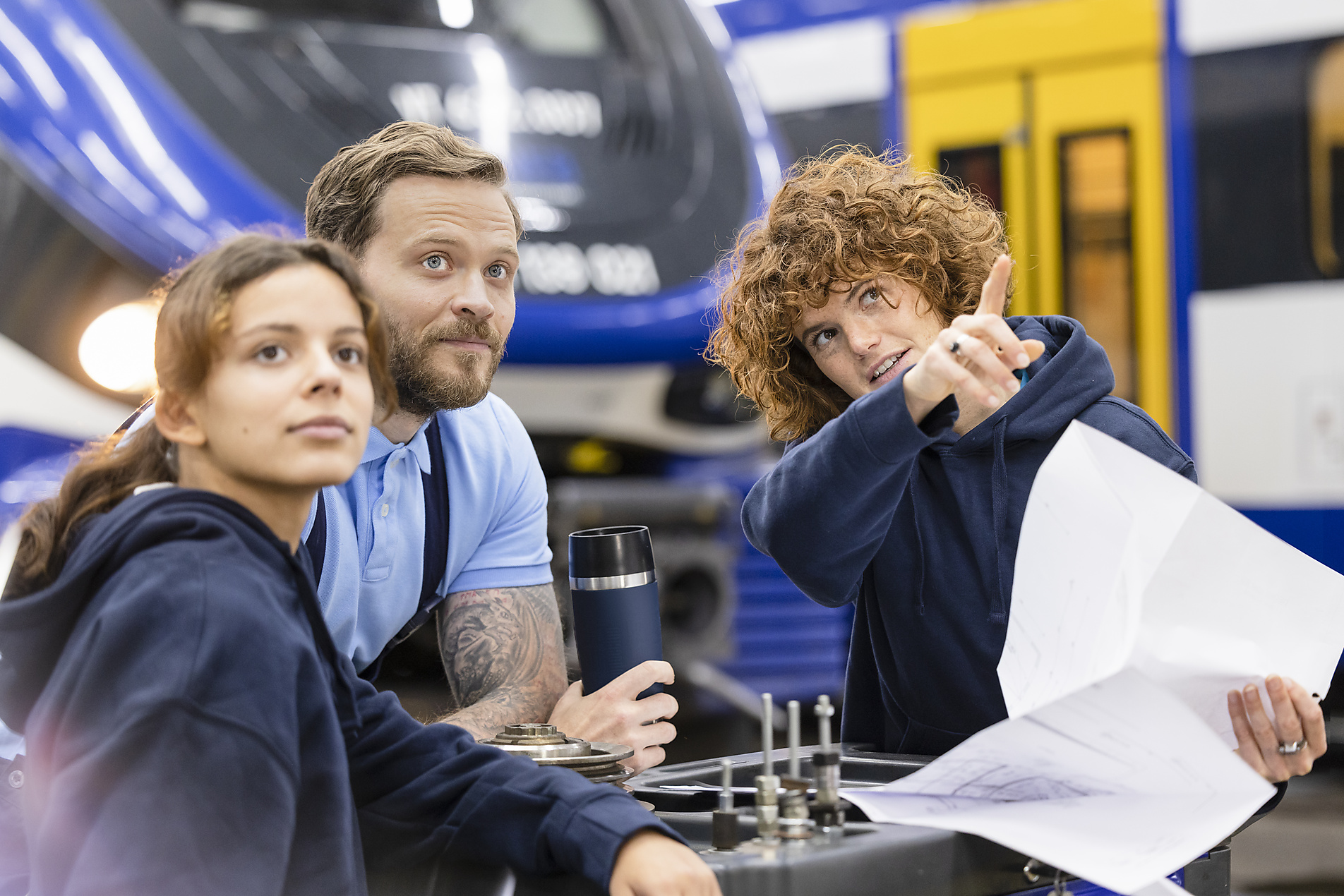
This form of training, known as an apprenticeship, is very practical and business-oriented, as around 80% of the training takes place in a company and 20% at a vocational school.
It is open to all young people who have completed nine years of compulsory schooling. An apprenticeship contract is concluded between the training company and the apprentice. If the apprentice is still a minor, the signature of the legal guardian is also required. The apprentice programme lasts between 2 and 4 years, depending on the chosen apprenticeship, and is completed with a final apprenticeship examination. Some apprenticeships have a modular structure, in which the apprentice is allowed to specialize after a two-year basic module and one core module.
There are currently around 200 commercial, industrial and service-orientated apprenticeships covering all areas of the economy, from optometry and baking to electrical engineering, district heating technology, retail and process engineering. They are evaluated at regular intervals and supplemented if necessary.
Apprentices with non-Austrian citizenship must be entitled to reside in Austria. During the apprenticeship, the apprentice is entitled to an appropriate apprenticeship salary; this is usually set out in the collective agreement for the respective industry. The apprentice's salary increases annually and the apprentice also receives 14 monthly salary payments, like regular employees.
There is also the "apprenticeship with Matura" model, which combines practical vocational training with the advantages of the school leaving exam, so that pupils are also qualified to study at university. After successfully completing the final apprenticeship examination, it is possible to take the Berufsreifeprüfung, which can be prepared for in advance during the apprenticeship.
Vocational training acquired abroad may be recognised as equivalent to the Austrian final apprenticeship examination after applying to the Federal Ministry of Economy, Energy and Tourism.
Apprenticeships are a good basis for further vocational training at tertiary level. In addition to master craftsman examinations, more and more training providers, e.g. universities of applied sciences, are also offering vocational courses tailored to apprenticeship graduates. The master craftsman's examination is an important professional development step for skilled workers, which demonstrates a high level of expertise and can be a prerequisite for managing or setting up a company. The master craftsman examination is equivalent to a bachelor's degree.
The Polytechnic School
Mittelschule students (and AHS graduates of lower secondary level who want to learn a trade) who have completed the 8th school year must attend a polytechnic school for one year to complete their nine years of compulsory education.
Pupils can also voluntarily attend a pre-vocational school for two years in order to receive an additional year of training. At the pre-vocational school, students get to know a selection of around 200 occupations through visits to companies and training workshops. The occupations include, for example, construction, administration and organization, technology, graphics, trade and fashion.
The curriculum also includes general education and basic vocational training in areas that interest the individual student. Students with special educational needs can attend integrated classes. After completing school, students who wish to continue at school can progress to the second year of a vocational middle school or the first year of a vocational high school.
Further Information on Dual Vocational Training
Find your vocational school.
More information about the apprenticeship system (dual vocational training).
To the apprenticeship portal (in German).